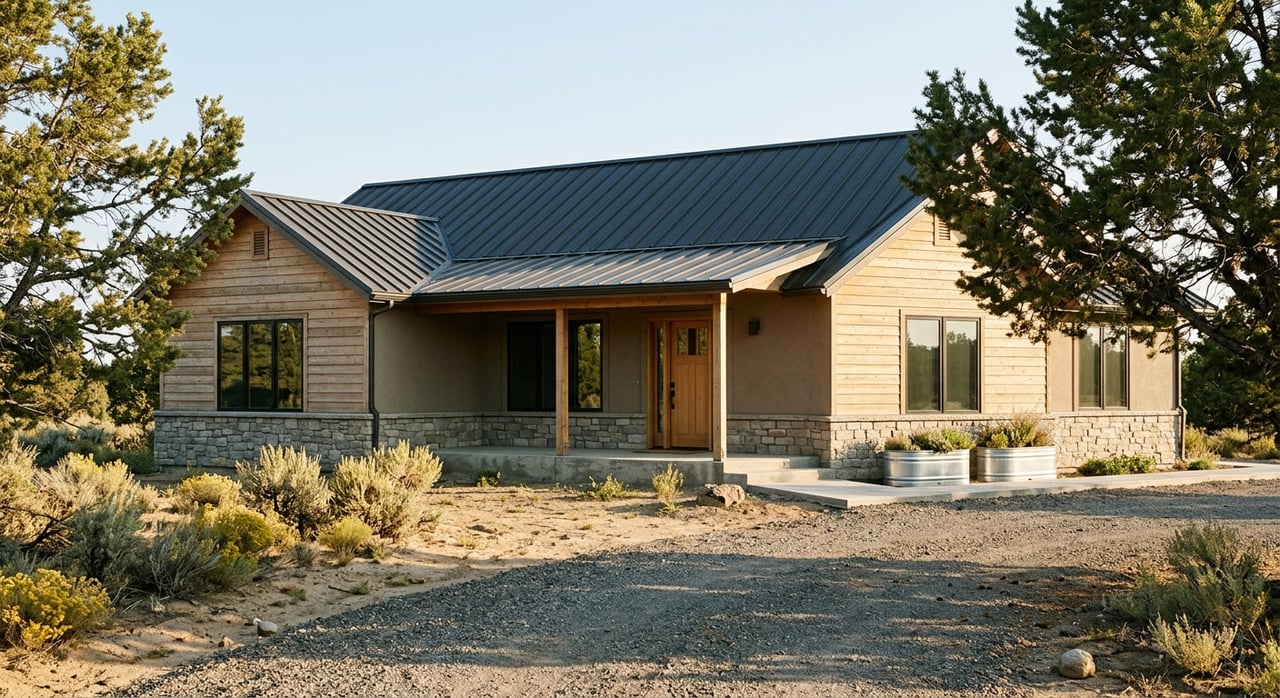
Exploring Rural Living And Land In Silver Springs
May 14, 2026
May 14, 2026
Looking for room to spread out without losing sight of the practical side of ownership? Silver Springs offers that rare mix of open space, varied property types, and a location shaped by major highways, local recreation, and long-term planning. If you are thinking about buying a home on acreage, investing in land, or simply exploring a more rural lifestyle in Northern Nevada, it helps to know what makes this market different. Let’s take a closer look.
Silver Springs is a census-designated place in Lyon County with 5,629 residents and 71.63 square miles of land area, according to the 2020 Census. That scale matters because it helps explain why the market feels more spread out and more varied than many nearby communities.
The area also has a high owner-occupied housing rate of 84.8%, with a median owner-occupied home value of $244,400 based on the 2020-2024 American Community Survey. For you as a buyer, that can signal a market where many properties are held for long-term use rather than short-term turnover.
Lyon County’s 2020 Master Plan describes Silver Springs as a bowl-shaped valley centered on Lahontan Reservoir and located at the crossroads of US 50 and US 95A. The county also points to the area’s central location and relatively flat terrain as part of its growth potential.
One of the biggest mistakes buyers make is assuming Silver Springs is one type of market. It is not. County planning shows a mix of Suburban Residential, Rural Residential, Low Density Residential, Mixed Use, Commercial, Employment, Industrial, and infill-oriented areas.
That means your experience can vary a lot depending on the parcel or neighborhood pattern you choose. Some properties may feel more residential and ready to use, while others may require much more planning before you can build or improve them.
If you are looking for a quieter pace, more land, or space for hobbies and equipment, Silver Springs may offer options that are harder to find in more built-out markets. But it is important to separate lifestyle appeal from property readiness.
Silver Springs is not a single-product housing market. Official county parcel records show examples that range from lots under an acre to larger vacant tracts.
That mix includes parcels such as:
For you, that means the search process should match the type of property you actually want. Buying a smaller platted lot is very different from buying raw or semi-improved acreage, and the due diligence is different too.
Before you fall in love with a parcel, ask a simple question: What do you want this property to do for you? Your answer shapes everything that comes next.
If you want a move-in-ready home, your focus may be on condition, utilities, access, and financing. If you want land for a future home, workshop, or long-term hold, you need to confirm whether the parcel is aligned with that plan now, not just in theory.
Lyon County’s requirements make one point very clear. In Silver Springs, value and usability are highly parcel-specific.
One of the most important parts of rural property due diligence is understanding utility service. In Silver Springs, the utility path varies by parcel.
Lyon County provides sewer service in the Silver Springs GID service area. Water service in the community is provided by Silver Springs Mutual Water Company, which describes itself as a private nonprofit water company.
Not every property will have the same service setup. Some parcels may be closer to existing infrastructure, while others may need a different water or wastewater solution.
The county also states that building permit applications will not be accepted until water and sewer provisions are addressed. Depending on the parcel, that documentation may include:
This is why a low list price on land does not always mean a low total cost. If water, sewer, or septic planning is still unresolved, your timeline and budget can change quickly.
If a parcel will rely on a private well or an onsite system, your due diligence should go deeper. Nevada’s onsite sewage disposal system program governs septic and similar systems, and the state requires OSDS plans to be designed by a registered Nevada professional engineer.
If water service will come from a well, Lyon County says the owner must also address water-right relinquishment under Nevada Division of Water Resources requirements. That is a local step buyers should understand early, especially when comparing parcels with public service versus private systems.
Private-well buyers should also plan for independent water-quality testing. NDEP notes that private-well water quality is not regulated by the Bureau of Safe Drinking Water.
Access is another area where rural buyers can get surprised. A property may look easy to reach on a map, but legal and permitted access still needs to be confirmed.
Properties that access county roads or state highways need the appropriate access permit from Lyon County or NDOT. For larger projects, review can also involve floodplain, drainage, grading, and stormwater issues.
In practical terms, this means you should not assume a parcel is build-ready just because it appears flat or open. In Silver Springs, relatively flat terrain can be an advantage, but permits and site conditions still matter.
If you are considering a rural home or acreage, fire readiness should be part of your planning. Silver Springs is served by the Central Lyon County Fire Protection District.
The Nevada Division of Forestry recommends defensible space, vegetation management, fire-resistant materials, and a local defensible-space inspection for rural homes. These are not just maintenance details. They can affect how you plan improvements and how you care for the property over time.
Silver Springs has clear lifestyle appeal for buyers who want access to the outdoors. Lahontan State Recreation Area is a major local amenity for boating, fishing, camping, horseback riding, and other outdoor recreation.
The Silver Springs Airport also adds another layer of interest, with hangars and fueling services available. For some buyers, these features support the appeal of hobby acreage or a more flexible rural lifestyle.
Still, amenities do not replace due diligence. Recreation and location can support demand, but they do not guarantee that a specific parcel is ready for your intended use.
If you are evaluating land or a rural home in Silver Springs, a careful checklist can save you time and money. County and state requirements point to several items you should verify before moving forward.
Focus on these key questions:
This is where a strategy-led approach matters. The right property is not always the one with the most acreage or the lowest sticker price. It is the one that best matches your goals, budget, timeline, and risk tolerance.
Silver Springs can be appealing precisely because it is not one-size-fits-all. That same flexibility is also why buyers benefit from clear, proactive guidance.
When you are comparing a small residential parcel, a manufactured-home property, and a larger vacant tract, the decision is not just about price. It is about understanding the full picture, from utility path and access to long-term usability.
A thoughtful buying strategy can help you avoid spending time on properties that do not fit your plans. It can also help you focus on the parcels and homes that make sense both financially and practically.
If you are exploring rural living or land in Silver Springs, working with someone who understands both the local market and the financial side of real estate can make the process much more clear. When you are ready to talk through your goals, connect with Samira Khaled for tailored guidance on homes, acreage, and land opportunities in Northern Nevada.
Stay up to date on the latest real estate trends.

Explore crystal-clear waters, world-class skiing, and unforgettable mountain moments all year long
Your goals deserve focused attention and thoughtful execution. With a boutique-level standard of service, every decision is guided by preparation, market insight, and a commitment to excellence—ensuring a seamless experience from strategy to closing.

15425 Wedge Pkwy Suite 105, Reno, NV 89451