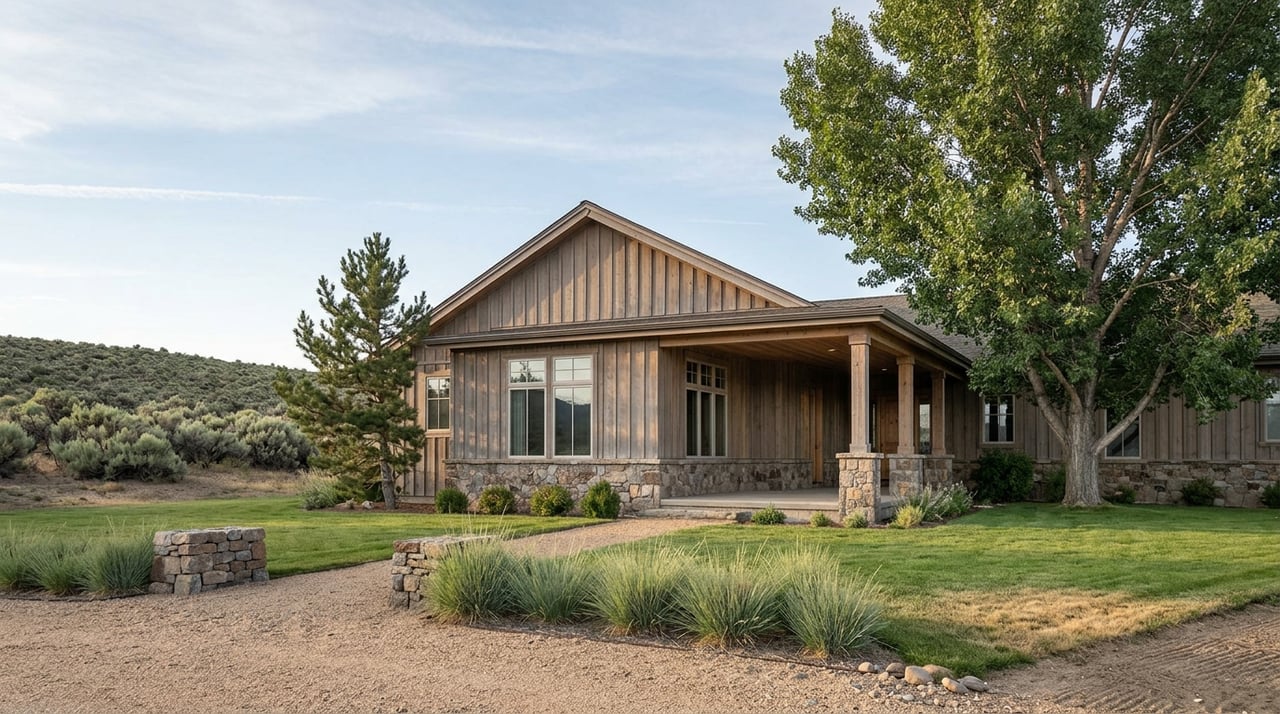
Yerington Water Rights Real Estate: What to Verify Before Buying
September 24, 2026
The Las Vegas Review-Journal reported that in May 2026, the Nevada Department of Wildlife found itself in court against another arm of its own state government. At stake was a permit the department had held for decades, allowing it to pump 861.5 acre-feet of groundwater for the Mason Valley Fish Hatchery, a facility north of Yerington that raises tens of thousands of trout a year for lakes and rivers across western Nevada. The original permit dated to 1967. Somewhere along the way, paperwork lapsed. The State Engineer's office canceled the permit, then reinstated it, but with a new priority date: 2025.
Fifty-eight years of seniority, gone in a filing gap.
If a state agency with in-house counsel and full-time water managers can lose that much ground over paperwork, a private buyer closing on forty acres near Wellington or Smith Valley without a water rights specialist on the team is exposed to the same mechanism. That is the thesis worth sitting with before you write an offer on anything in Mason Valley advertised as coming with water rights: the water right has its own filing history, its own priority date, and its own vulnerability to lapse. The acreage can be perfect and the water can still fail you.
As the Nevada State Water Plan explains, Nevada allocates water under the prior appropriation doctrine, commonly summarized as first in time, first in right. When a basin has more water committed on paper than it can physically deliver, the state does not cut everyone proportionally. It cuts by priority date.
This is why the Fish Hatchery case matters beyond wildlife management. The hatchery's attorney argued in the legal complaint that the reinstated 2025 date would put the facility first in line for cuts if the State Engineer ever ordered curtailment in the basin, a scenario the complaint treated as a real possibility rather than a hypothetical.
For a buyer, the equivalent question is not "does this parcel have water rights" but "what is the priority date on those rights, and how would that date rank if the basin were curtailed tomorrow." A listing that says "water rights included" indicates that the rights are represented as part of the offering; it does not establish their priority date or current status.
Mason Valley, the agricultural basin that surrounds Yerington and feeds off the East and West Walker rivers, is not a marginal case. According to the legal complaint filed in the Fish Hatchery dispute, the State Engineer estimates the basin can sustainably deliver about 25,000 acre-feet of water a year. Water rights already committed on paper in that same basin total roughly 159,593 acre-feet.
| Mason Valley basin | Acre-feet |
|---|---|
| State Engineer's estimated sustainable yield | ~25,000/year |
| Water rights committed on paper | ~159,593 |
That is more than six times the water the basin can reliably produce, all committed on paper across irrigation, industrial, municipal, and domestic uses. Nevada is not unusual in this respect. The state has 256 groundwater basins, and a large share of them are designated because the State Engineer has determined they need active management, typically because of overallocation like this. What makes Mason Valley worth flagging specifically is that the gap between paper commitments and real water is large enough that a court case over 58 years of priority is playing out here right now, not in a basin somewhere else in the state.
None of this means water in Mason Valley disappears tomorrow. It means the buffer between "everyone gets their full allocation" and "someone gets cut" is thinner here than the median price on a listing would suggest.
Two months after the Fish Hatchery complaint became public, Lyon County produced a second reminder that this is a live regulatory environment. In July 2026, NNBW reported that the Nevada State Engineer's office issued cease-and-desist letters to the developer behind what is planned to be the largest solar project in the state, after regulators said contractors illegally pulled water for construction from a nearby geothermal operator's rights and from an irrigation ditch. The geothermal operator, Homestretch, holds permits for industrial production from its own geothermal resources, none of which authorize construction-related water use. Contractors told the state they had an informal agreement with a landowner who intended to fallow a field and let them use her decree water, but once told a separate permit was required, they emptied the trucks already filled and left the property. The companies involved were given until the end of July 2026 to confirm they were back in compliance.
A landowner's informal agreement to share water was not enough to make the use legal. That is the same principle running through the Fish Hatchery case: what matters is the documented, permitted right, not the intent behind a handshake or a paperwork assumption. For buyers, the episode is a reminder to verify a seller's verbal assurance that "the water goes with the land" rather than rely on it alone.
Here is the detail that catches buyers off guard most often: Schroeder Law Offices says title insurance for water rights is not generally available in Nevada. When you buy a house, title insurance protects you if a lien or ownership claim surfaces after closing that nobody caught. When you buy a water right, that backstop does not exist in the same way. Verifying legal title to a water right means physically checking the public record, confirming the right has actually been put to beneficial use as claimed, and confirming there is no competing claim of ownership that never made it into the file.
This is not a reason to avoid land with water rights in Yerington or Mason Valley. It is a reason to build the verification into your due diligence period rather than assuming it happens automatically at closing, the way it does with a house.
Before removing contingencies on a parcel that includes water rights in Mason Valley, Smith Valley, or Wellington, a buyer's team typically needs to:
Acreage and ranch transactions with water rights attached routinely take longer to close than a straightforward in-town resale, and that extra time is usually spent exactly here, in records review rather than in negotiation. Building that runway into your offer timeline from the start avoids the scramble that happens when a lender or attorney flags an unresolved water question two weeks before a scheduled closing.
If the seller says the water rights are "included," is that enough? It's a starting point, not a substitute for verification. The Fish Hatchery case shows that even a long-held, well-documented right can lose priority status over a paperwork lapse, so a buyer should confirm the current status directly with the Division of Water Resources rather than relying on the seller's description.
Is this an issue everywhere in Nevada, or specific to this area? Overallocated groundwater basins exist across the state, but Mason Valley's gap between paper commitments and sustainable yield is large enough, and the two 2026 cases involving it are recent enough, that buyers here should treat verification as standard practice rather than an edge case.
Land and water in Mason Valley can be a genuinely good long-term position, but the listed price alone does not establish the status or value of any associated water right. What the water is actually worth depends in part on its documented status. If you're evaluating acreage in Yerington, Smith Valley, or anywhere else in Lyon County where water rights are part of the deal, Samira Khaled can help you build the verification into your timeline before you're under contract, not after. Let's Connect.
This article is general information, not legal, tax or financial advice. Consult a qualified professional about your situation.
Stay up to date on the latest real estate trends.
Your goals deserve focused attention and thoughtful execution. With a boutique-level standard of service, every decision is guided by preparation, market insight, and a commitment to excellence—ensuring a seamless experience from strategy to closing.

308 N. Curry Street, Suite 202 Carson City, NV, 89703